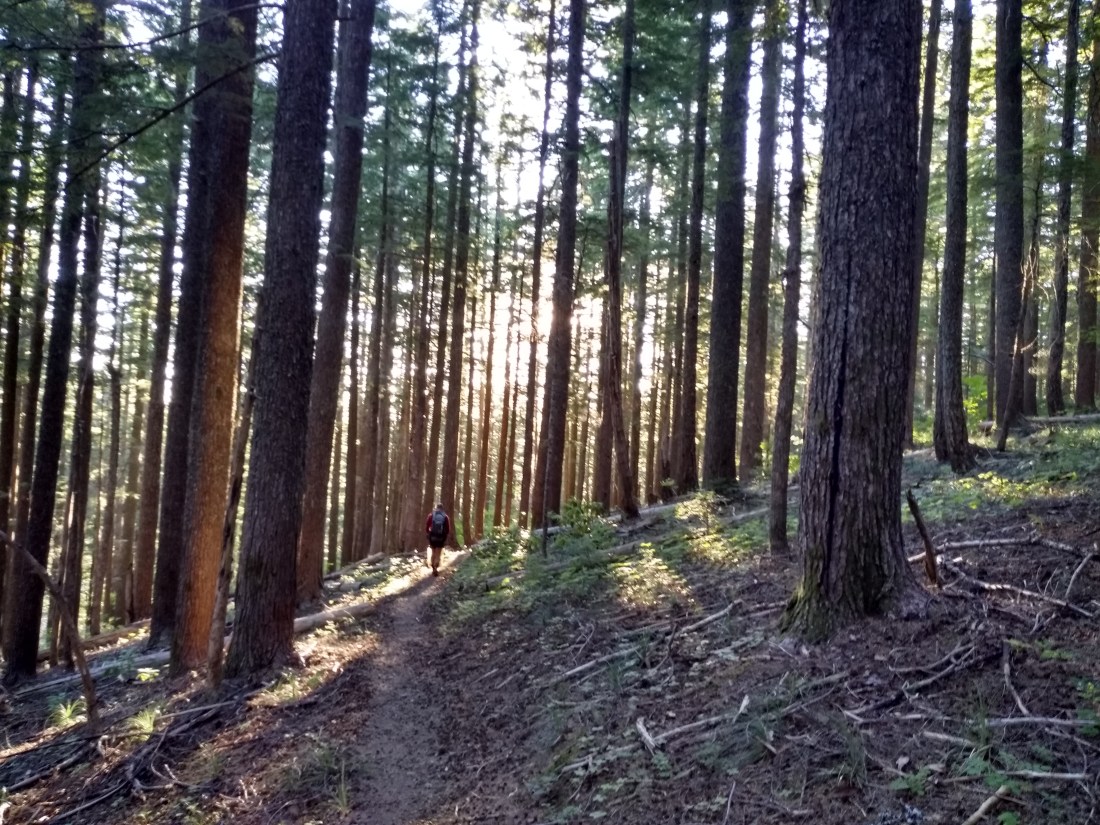
Jay and I were privileged to walk through sections of old growth forest during the last several days. The girth and height of the trees are incredible!
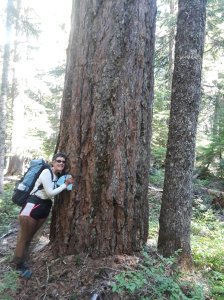
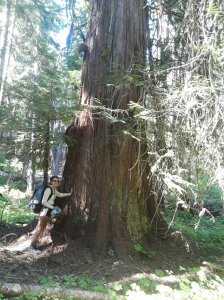
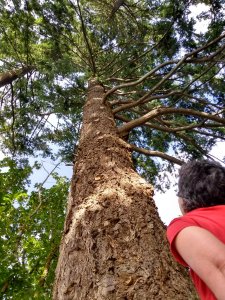
This huge Douglas fir provides shade for the Pacific silver fir. Eventually, the Pacific silver fir will outcompete the giant beside it and become the dominant species.The western red cedar can grow to a diameter only surpassed by the giant sequoia.We couldn’t resist looking up, and up, and up, to see the branches of this gigantic Douglas fir touch the sky!
A forest is more than trees, though. Here are a few pictures of other sights from our days of walking.
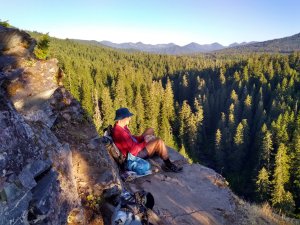
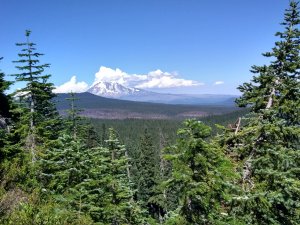
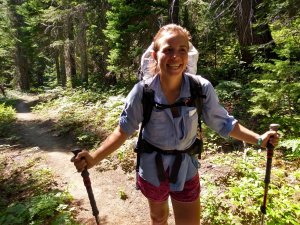
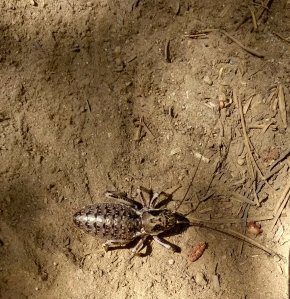
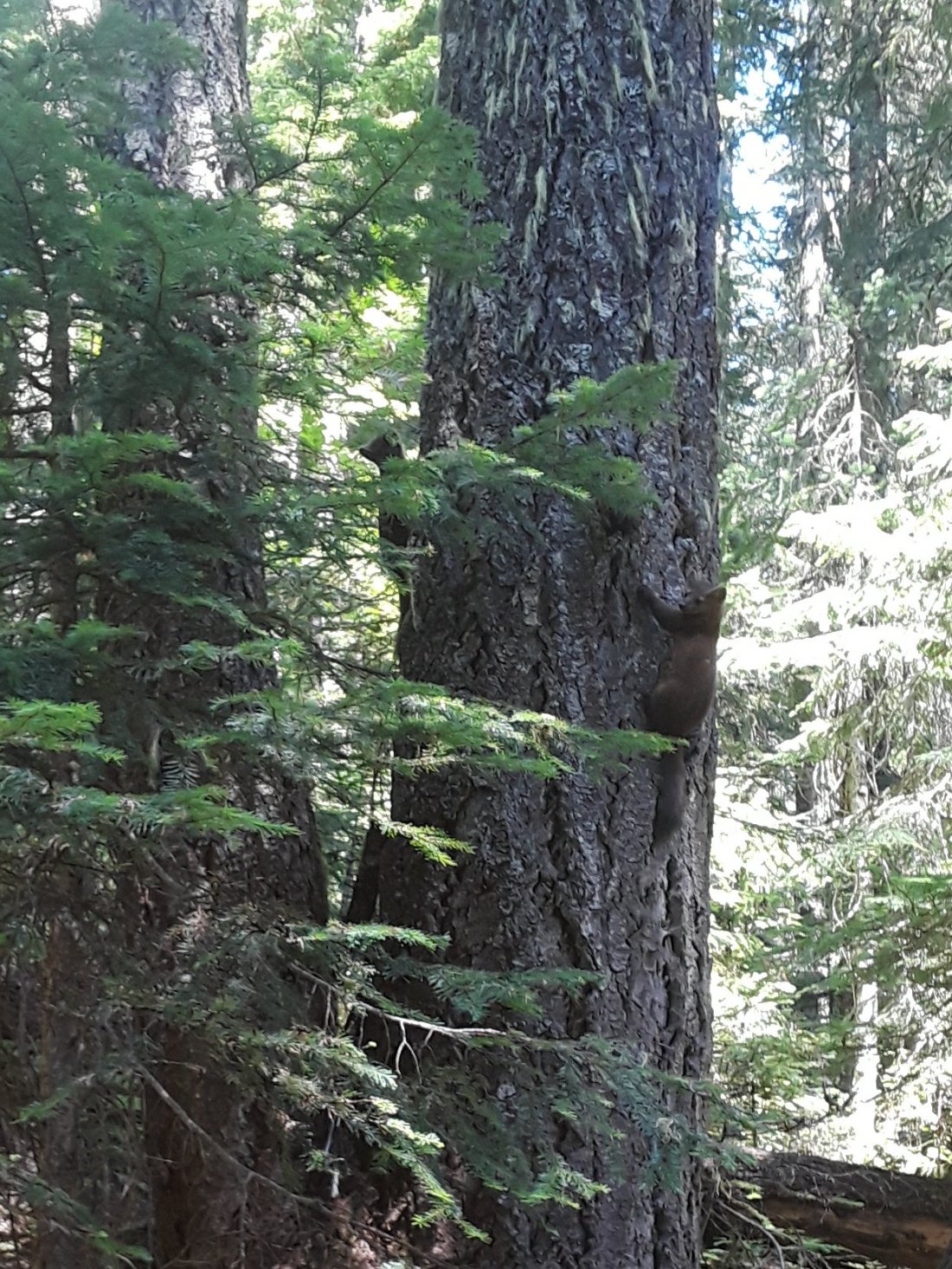
What a breakfast view!Mt Adams collects thunderheads.I’m very grateful to the Mt Hood Chapter of the PCTA for all the trail maintenance they have done on this section of trail!We walked across scree fields…… we crossed bridges…… and we passed many lakes.We met hikers daily. Here, southbound PCT hiker, Twist, gives us advice on the next town.We saw insects. (I have NO idea what this is!)On our fifth day of hiking, Jay saw two young martins! I was SO excited when he quietly pointed them to me! We both heard the two martins “talking” to each other, and Jay later told me that he heard the mother talking to the two young ones when he first came upon them.
The Cascade Mountains, part of the Pacific Ring of Fire, form a steep, rugged, often snow-covered barrier along 700 miles of the western “backbone” of North America. From Mt Lassen in northern California to the confluence of the Nicola and Thompson rivers in British Columbia, these mountains have been forming for the last 7 million years.
The Columbia River breaches these mountains in a grand east to west sweep. Eight hundred years ago, a landslide of gigantic proportions temporarily dammed the river here. The Native Americans have a story of being able to cross this huge river, dry shod, upon the “Bridge of the Gods”. The landslide dammed the river for quite some time before eventually succumbing to the relentless workings of water and gravity prevailing over rock and stone, collapsing the ancient Bridge of the Gods.
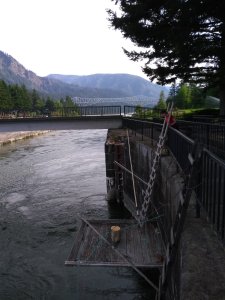
Epic rapids formed here, making an abundant fisheries for the Native Americans. Though the Cascade Rapids were drowned when Bonneville Dam was constructed, several native tribes still use fishing platforms when salmon and steelhead are running.
Sarah peers down at a dip net on a fishing platform.
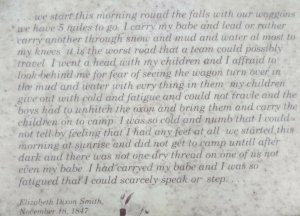
Pioneers, fur trappers, and explorers used the Columbia River in the early 1800s. They found the Cascade Rapids to be a great hindrance, requiring an arduous five mile portage. A historical sign describes it better than I could.
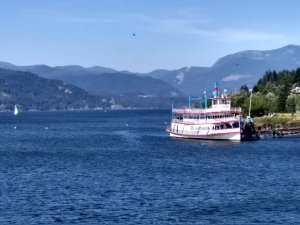
Eventually a canal with locks was built. The project took 21 years, and the locks were used for 42 years before being replaced by the railroad. A historical sternwheeler offers tourists a dinner cruise. The railroad is also still quite active, carrying countless boxcars of goods along a river that has been a gateway through the Cascade Mountains for thousands of years.
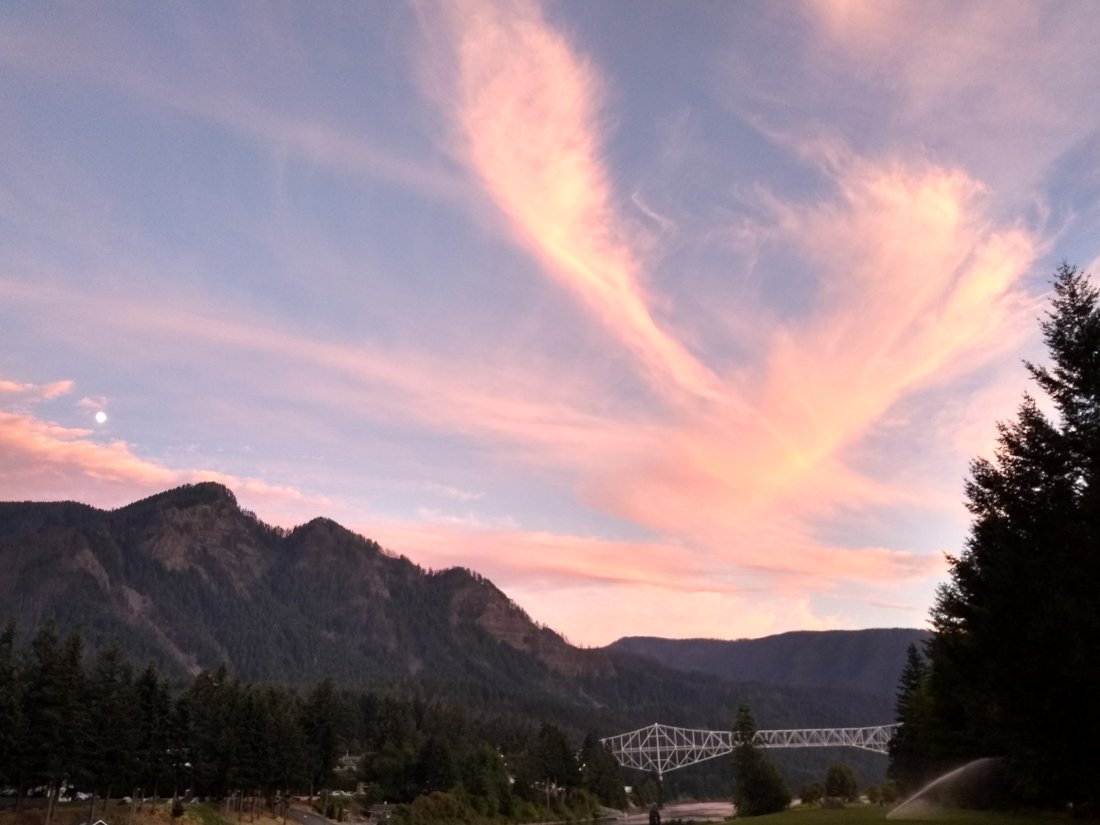
The PCT crosses a modern bridge, still called Bridge of the Gods, here at Cascade Locks. After almost two weeks off, Jay and I will start hiking north from here tomorrow.
I’m looking forward to our re-entry into forests and mountains. But it was good to take some time today to reflect upon this place where ancient natural forces met in an awesome display of power.
A giant Douglas fir assists me with some horizontal reflection time.
Bridge of the Gods at sunset, with an almost full moon.







 Sarah and Jay Hike